The VA loan's biggest selling point — $0 down, no PMI — gets talked about constantly. What doesn't get explained clearly is the VA funding fee, a cost unique to this loan type that catches a lot of first-time buyers off guard at closing. Here's exactly how it works and what it actually costs, based on current 2026 rates.
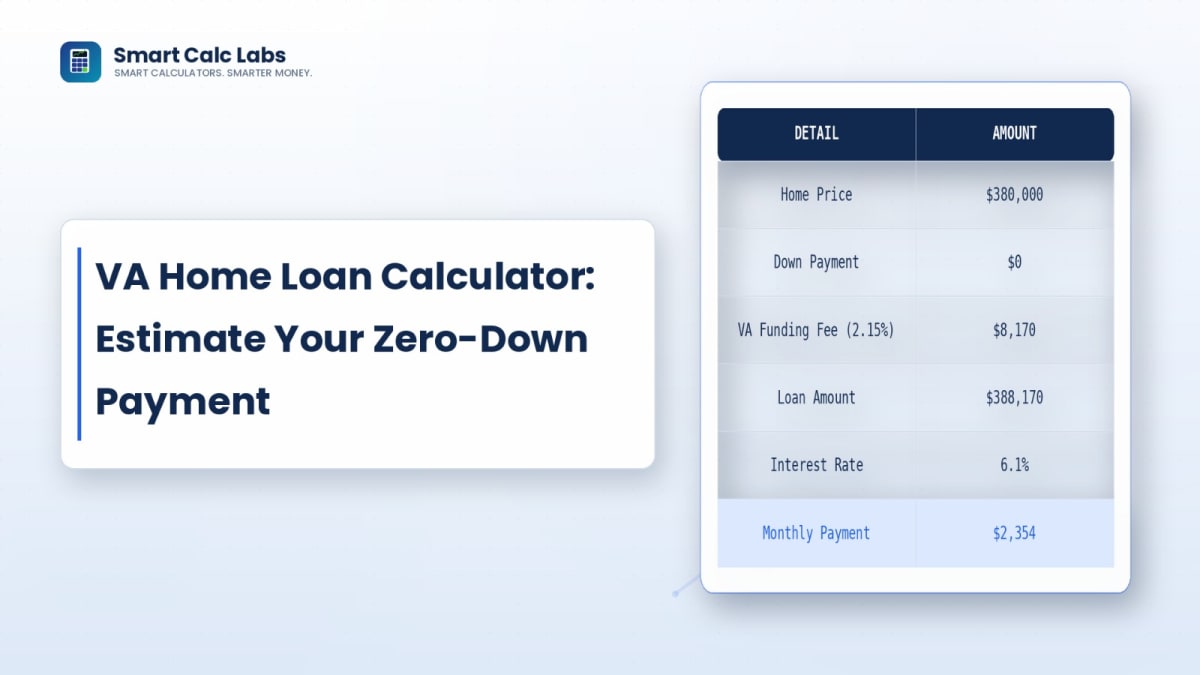
Run your numbers through the VA Home Loan Calculator to get your estimated payment including the funding fee — the breakdown below explains where that fee comes from.
The VA Funding Fee: 2026 Rates
Because VA loans require no down payment and no monthly mortgage insurance, the funding fee is what keeps the program self-sustaining for taxpayers. It's a one-time percentage of your loan amount, and it depends on two things: whether this is your first VA loan, and how much you put down.
- First-time use, 0% down: 2.15%
- First-time use, 5%–9.99% down: 1.50%
- First-time use, 10%+ down: 1.25%
- Subsequent use, 0% down: 3.30%
- Subsequent use, 5%+ down: same reduced tiers as first-time use (1.50% / 1.25%)
- IRRRL (streamline refinance): a flat 0.50% regardless of prior use
On a $300,000 loan with 0% down as a first-time borrower, that's a $6,450 fee. On a second VA loan with 0% down, the same $300,000 balance costs $9,900 instead — nearly $3,500 more just for being a repeat user with no down payment.
Who Pays Nothing
The funding fee is waived entirely for veterans with a service-connected disability rating of 10% or higher, Purple Heart recipients on active duty, and surviving spouses receiving Dependency and Indemnity Compensation (DIC). If you fall into one of these categories, confirm your exemption on your Certificate of Eligibility (COE) before closing — this can save $4,000 to $10,000 depending on loan size, and it's worth double-checking since lenders occasionally miss it.
Should You Finance the Fee or Pay Cash?
Most borrowers roll the funding fee into the loan balance rather than paying it out of pocket, since VA loans allow this and it keeps the $0-down benefit intact. The trade-off: financing it increases your loan balance and the total interest paid over the life of the loan. On a $6,450 fee financed at a typical rate over 30 years, you'll pay roughly $4,000–$5,000 in additional interest over the loan's life compared to paying it in cash upfront — worth weighing if you have the cash available.
A Down Payment Still Changes the Math
Even though the VA loan doesn't require a down payment, putting down 5% instead of 0% drops your funding fee from 2.15% to 1.50%. On a $400,000 loan, that's a $2,600 reduction in the fee alone — plus a smaller loan balance means lower monthly principal and interest. If you have some savings but not a full 20%, a modest 5% down payment is often the highest-value move available on a VA loan.
Common Mistakes
- Assuming "no down payment" means "no cost at closing." Standard closing costs (appraisal, title, lender fees) still apply — VA loans just don't require the down payment or monthly PMI. Budget for 2-5% of the loan amount in total closing costs.
- Not checking disability exemption status. Veterans sometimes pay the full funding fee simply because it wasn't flagged during underwriting — always confirm exemption eligibility on your COE.
- Ignoring the seller-concession option. VA rules allow sellers to contribute up to 4% of the purchase price toward concessions, including the funding fee, in addition to standard seller-paid closing costs. In a buyer's market, this is a real negotiating lever.
- Not comparing against FHA. FHA loans charge an upfront 1.75% mortgage insurance premium plus ongoing monthly premiums for the life of the loan in most cases. A VA loan's one-time fee with no monthly insurance is usually far cheaper over time for eligible borrowers — but only VA-eligible buyers have the choice.
How to Use the Calculator Effectively
- Confirm your usage tier — first-time or subsequent VA loan — since it changes your fee bracket significantly.
- Enter your planned down payment, even a small one, to see the funding fee drop between tiers.
- Compare financing the fee vs. paying cash to see the long-term interest difference on your specific loan amount.
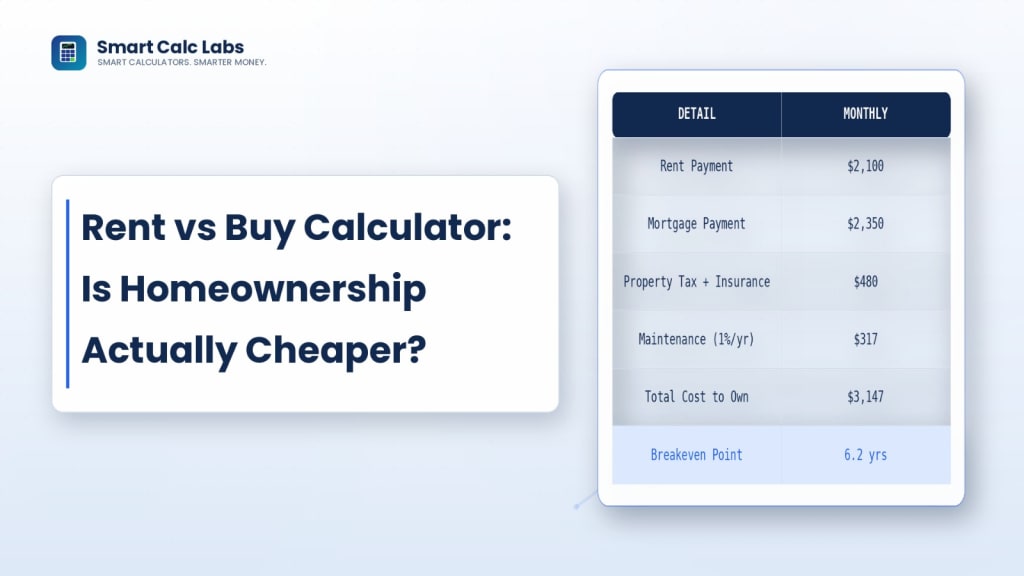
- Cross-check against a conventional or FHA scenario using our Rent vs Buy Calculator if you're still deciding whether buying makes sense right now.
Before You Rely on This
Funding fee rates are set by federal statute and can change — always confirm the current rate on your Loan Estimate before closing. This calculator estimates the fee and payment structure; it does not replace a formal pre-approval, which accounts for your specific credit profile, debt-to-income ratio, and the lender's underwriting requirements.
Disclaimer: The content provided on SmartCalcLabs is for educational and informational purposes only. We are not certified financial planners, tax advisors, or mortgage professionals. You should always consult with a licensed lender or VA-approved professional before making significant financial decisions.
Frequently Asked Questions
Do I have to pay the funding fee if I'm only 10% disabled?
Yes — a 10% or higher service-connected disability rating from the VA fully exempts you from the funding fee, regardless of loan amount or down payment. Confirm the exemption is reflected on your COE before closing.
Is the VA funding fee tax-deductible?
For 2026, the VA funding fee can be deducted similarly to mortgage insurance premiums, but this generally requires itemizing your deductions. Speak with a tax professional about your specific filing situation.
What happens to my funding fee tier if I restore my VA entitlement?
Restoring entitlement after paying off a previous VA loan makes your benefit available again, but it does not reset you back to first-time-use rates — you'll still be charged at the subsequent-use tier.
Bottom Line
The VA loan remains one of the strongest mortgage benefits available, but "zero down" doesn't mean "zero cost." Know your funding fee tier, check your exemption status, and decide deliberately whether to finance the fee or pay it upfront — those three choices have a real, calculable effect on what the loan costs you over time.